
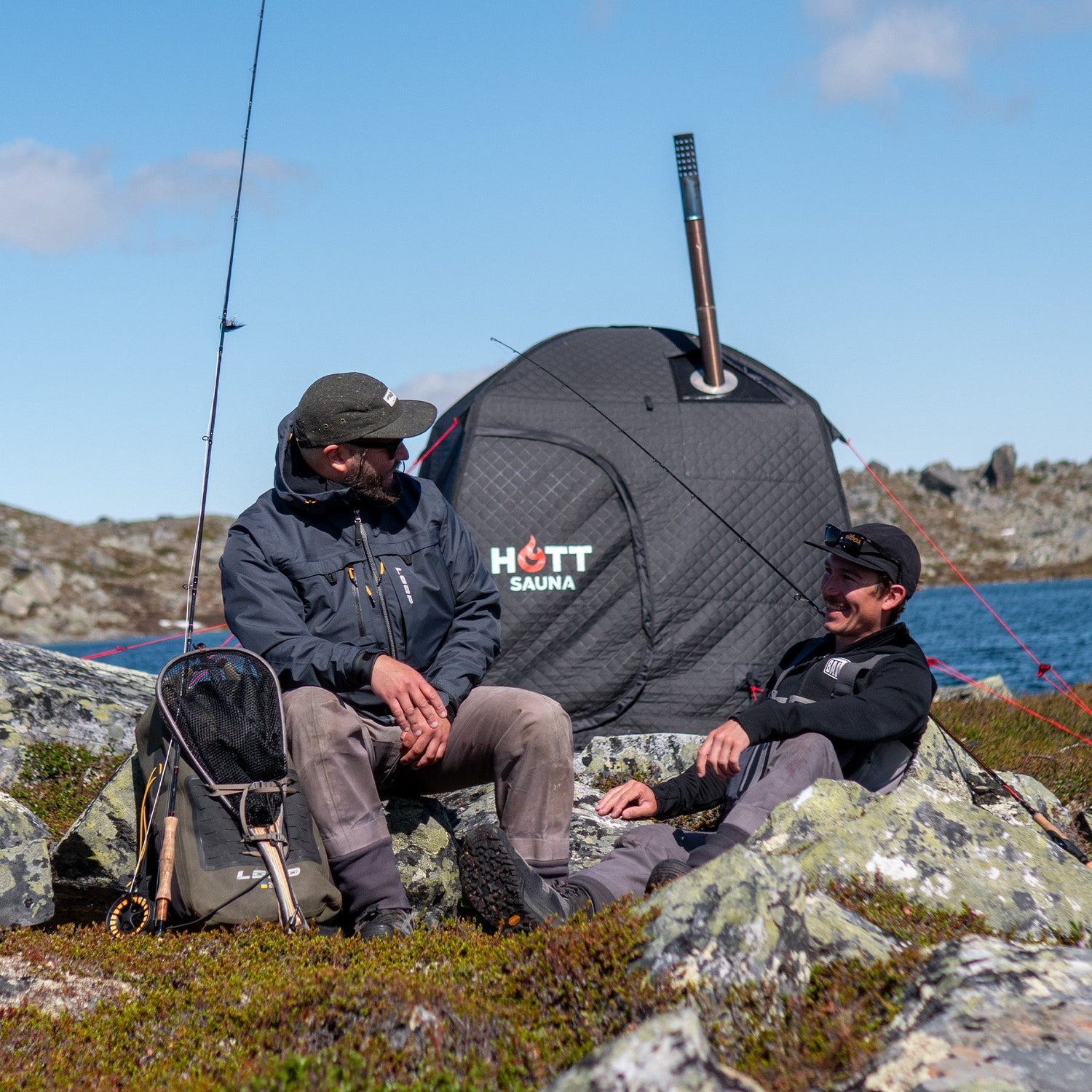
Short answer: Yes, a sauna tent works very well in winter if the fabric is insulated. A tent with three-layer fabric and a wood-burning stove reaches full sauna temperature even in extreme cold. HOTT Saunas' tents have been tested down to −30 °C. If you set up the tent on the ice by an ice hole, first check that the ice is thick enough: at least 10 cm of clear, hard ice, and preferably much more with a tent, stove, and group on it.
Winter sauna is something truly special. The crunch of snow, the cold air, and a dip in an ice hole between sauna sessions. Here's how to get the most out of your sauna tent when temperatures drop below zero.
Why the fabric matters most in winter
A simple, uninsulated fabric quickly lets heat escape when it's cold outside, which means you use a lot of firewood to maintain the temperature. Insulated, multilayer fabric works like a blanket and holds in the heat. Both HOTT Gnistan and HOTT Flamman have three-layer Oxford fabric designed for Nordic winter conditions.
How to set up the sauna tent in the snow
- Pack down the snow where the tent will stand, so the base is level and firm. Loose snow settles as the tent warms up.
- Give the stove a stable base, such as stone slabs, so it stands firmly when the snow underneath starts to melt.
- Secure it properly. Standard tent pegs don't hold well in snow and frozen ground. Use all the guy lines, preferably with snow anchors or pegs buried crosswise.
- Keep the chimney clear of snow-laden branches, and position the tent so the smoke blows away from the door.
How long does it take to heat up in cold weather?
Under normal conditions, HOTT tents reach 75–80 °C in about 10–15 minutes (Gnistan) and 20–25 minutes (Flamman), and can exceed 100 °C. In extreme cold and wind, it takes a little longer, so light the stove well in advance. Start with smaller pieces of firewood to heat up quickly, then add larger birch logs for steady heat.
Sauna tent on the ice by the ice hole
A sauna tent out on the ice with an ice hole just outside the door is winter sauna at its best. But ice must be taken very seriously, and it all starts with making absolutely sure it can support you.
- Check the ice thickness. The Swedish Life Saving Society recommends at least 10 cm of clear, hard ice for walking on. White snow ice is weaker and needs to be thicker. A tent, stove, firewood, and a whole group weigh much more than one person, so make sure you have a good safety margin.
- Measure in several places. Use an ice chisel or ice auger both on your way out and where the tent will stand. Ice thickness can vary within a small area.
- Choose your location carefully. Avoid flowing water, inlets and outlets, docks, and areas near reeds, where the ice is often weaker.
- Protect the ice from the stove. Place the stove on a heat-resistant surface, such as stone slabs, and keep an eye on the ice beneath and around the stove throughout the evening.
- Never swim alone. Someone should always keep watch while anyone is in the ice hole.
- Wear ice picks around your neck when moving on the ice, and keep a rescue line close at hand.
- Keep your dip brief. A few seconds is plenty. Then go straight back into the warmth.
- Mark the ice hole when you’re done, so no one else falls into it in the dark.
If you have even the slightest doubt about the ice, set up the tent on shore and only go out for your dip.

Dress appropriately between sessions
Prepare so you don’t get cold between the sauna and the ice hole: wear bathing slippers or neoprene socks on the ice, have a warm bathrobe or down jacket to put on right away, and wear a hat. Keep a dry towel inside the tent, where it will stay warm.
Dry the tent after a winter sauna
When warm, moist air meets cold fabric, condensation forms, and in winter it can freeze into ice on the inside. So leave the tent up with the stove running for a while after your last session, with the door ajar, to let the moisture escape. Brush off snow and ice before packing the tent away. If you do have to pack it while damp, hang it up and let it dry completely as soon as you get home to prevent mold.
Frequently asked questions
Can the sauna tent handle snow on the roof?
Brush off snow that accumulates on the roof, especially during heavy snowfall and if the tent stays up for a long time. Heavy, wet snow puts strain on the structure.
Can you use a sauna at −20 °C?
Yes, with an insulated tent. HOTT Sauna’s tents have been tested by customers in −30 °C. Expect to use more firewood and for it to take longer to heat up.
Can the sauna tent stay up all winter?
You can, but the fabric wears out faster when exposed to weather, sun, and snow for long periods. Take the tent down between uses if you can, and always let it dry thoroughly before packing it away.
Also read about sauna tent safety and see the sauna tents from HOTT Sauna.


Leave a comment
This site is protected by hCaptcha and the hCaptcha Privacy Policy and Terms of Service apply.